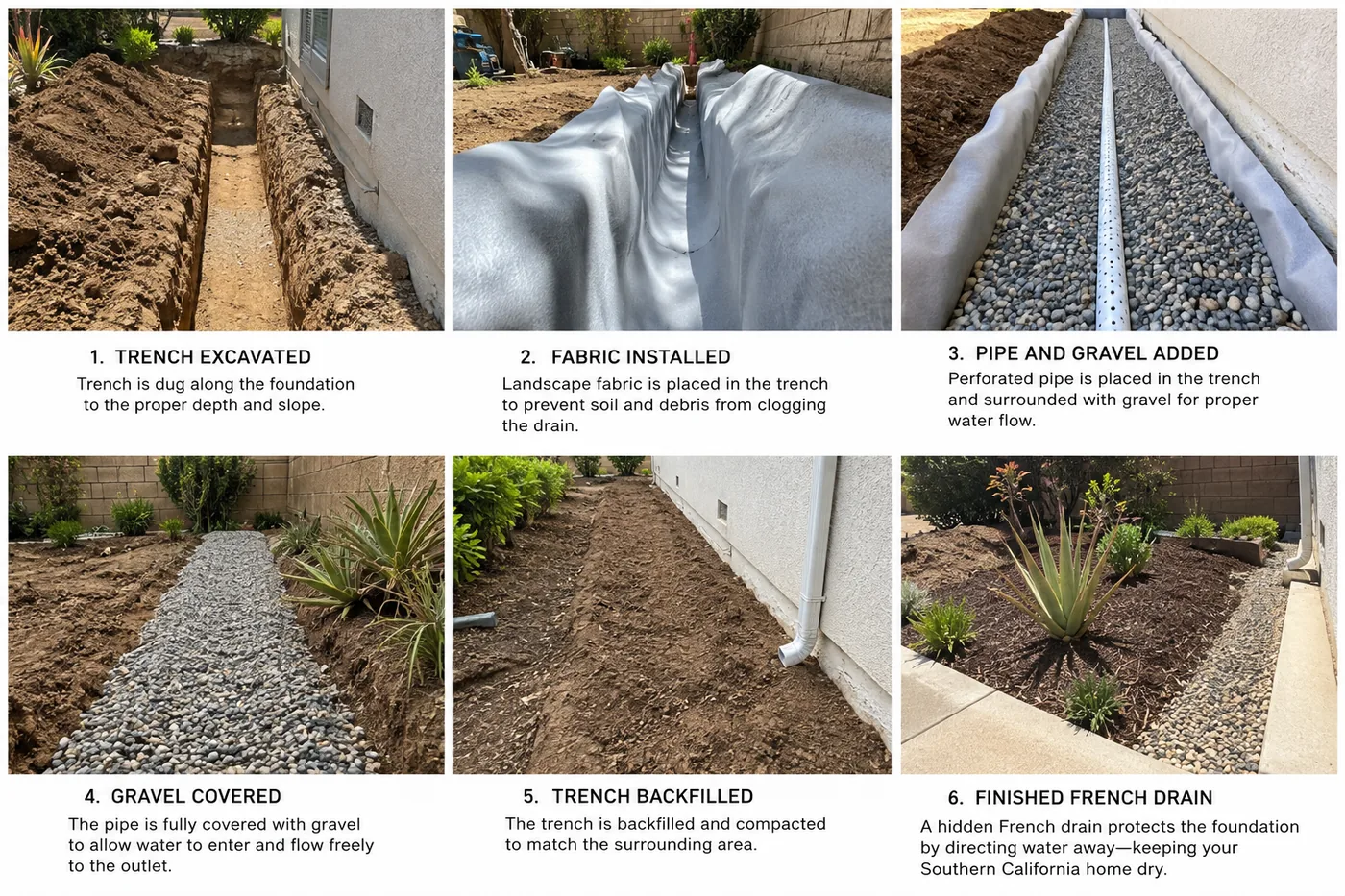
San Bernardino drainage problems are often easiest to understand when you separate the source of the water from the place where it finally collects. The sections below can help you decide what to inspect before planning a trench or repair.
Inspect the outlet before rainy weather
Remove leaves, soil, roots and landscape material from the discharge area so collected water has somewhere to go.
Keep cleanouts accessible
Do not bury cleanout caps under mulch or new landscaping. Accessible cleanouts make diagnosis easier when flow slows down.
Watch for settlement over the trench
A sunken strip can indicate soil settlement or a damaged pipe. Minor surface settling is common, but sudden depressions deserve inspection.
Separate roof debris from subsurface drainage
Solid downspout pipe and accessible catch points can keep roof sediment from entering perforated collection zones.
Check after landscape changes
New patios, retaining walls, irrigation zones or planting beds can change how water reaches the drain and where it exits.
When to Get a Site-Specific Drainage Assessment
If water repeatedly reaches a foundation, remains for days after rain, erodes a slope, or backs up from an existing drain, an on-site assessment can determine whether the fix is a French drain, catch basin, solid pipe, grading correction or a combination.