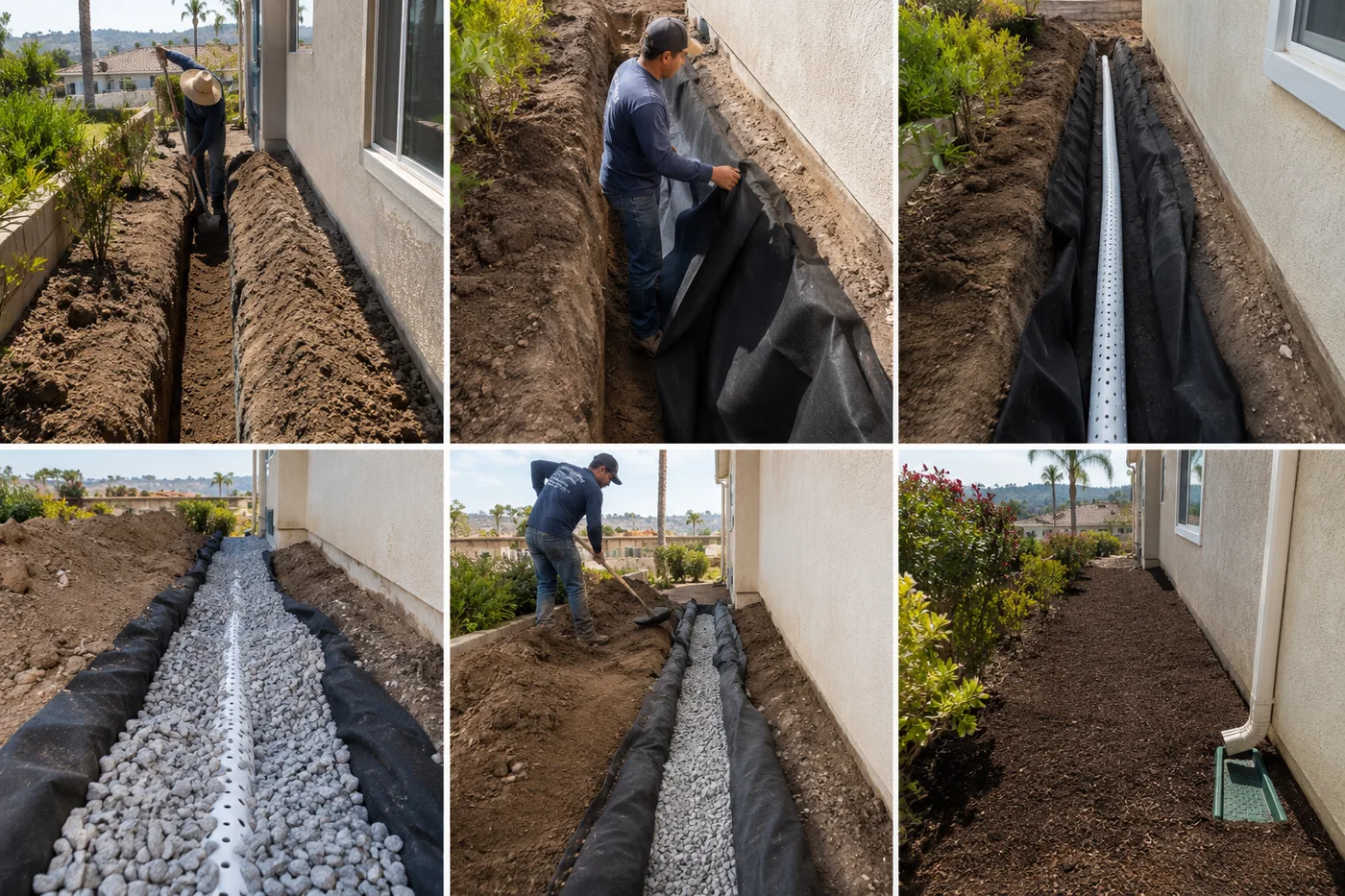
San Bernardino drainage problems are often easiest to understand when you separate the source of the water from the place where it finally collects. The sections below can help you decide what to inspect before planning a trench or repair.
Trench depth and excavation
A shallow open-yard run is very different from a deep foundation-side trench or work close to footings.
Access for equipment and materials
Narrow side yards, stairs, fences and mature landscaping increase hand work and material handling.
Outlet distance and elevation
The drain must maintain fall to a safe outlet. Long solid-pipe runs, pumps or erosion protection add scope.
Hardscape removal and restoration
Concrete, pavers and finished patios can cost more to remove and restore than the underground drainage materials.
Roots, utilities and buried surprises
Large roots, old irrigation, unknown pipes and utility conflicts can force a route change or slower excavation.
When to Get a Site-Specific Drainage Assessment
If water repeatedly reaches a foundation, remains for days after rain, erodes a slope, or backs up from an existing drain, an on-site assessment can determine whether the fix is a French drain, catch basin, solid pipe, grading correction or a combination.